
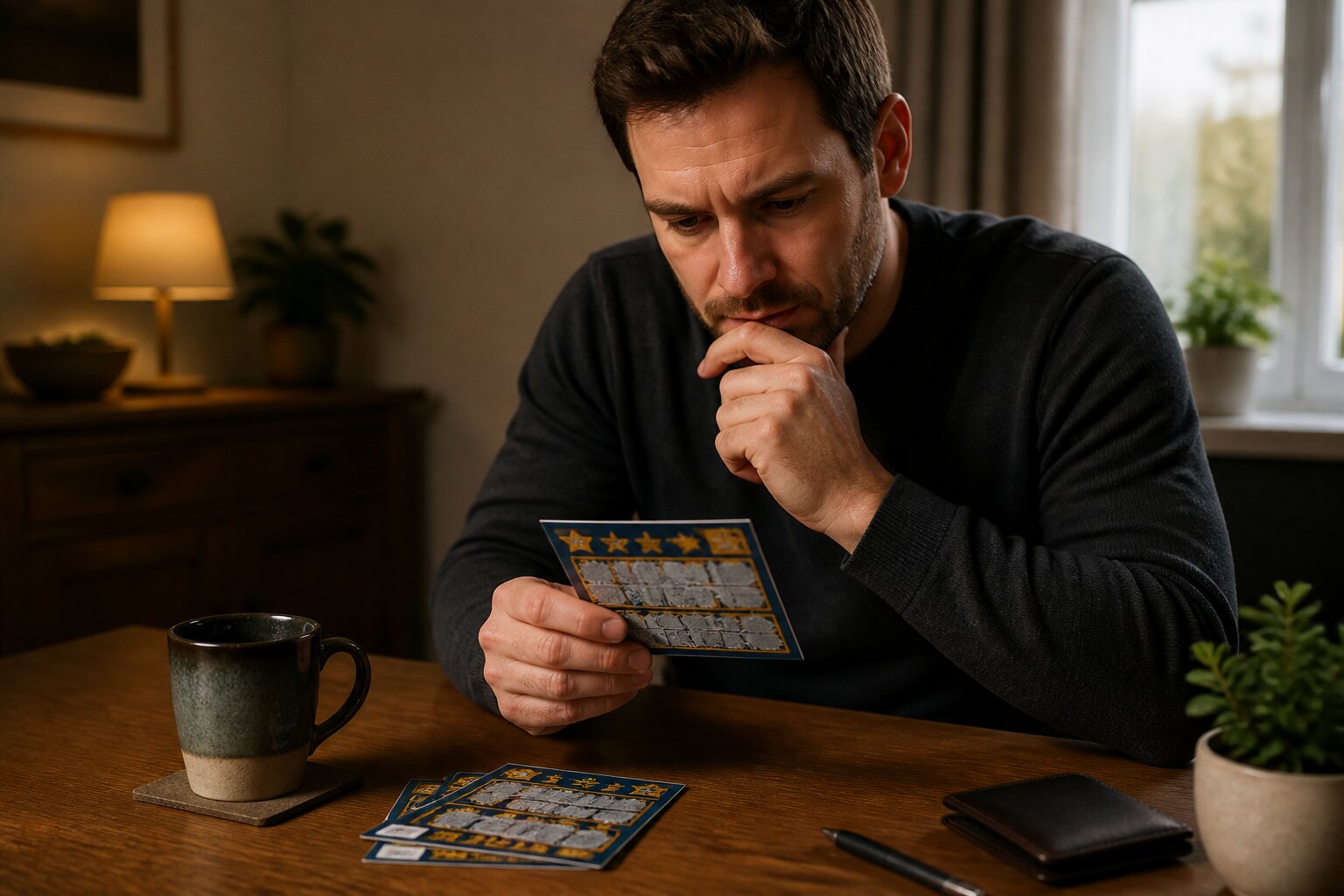
Ever wondered if anyone really wins those huge prizes shown on scratch cards? You’re not alone. Scratch cards are everywhere, promising quick thrills and the chance to win big, but do they actually pay out as much as they advertise?
Understanding how these games are structured — the odds, prize pools and payout rates — helps you decide whether a ticket is worth buying. Below we break down how scratch cards work, what the numbers mean, and what to expect if you do win.
Curious to see what the odds really tell you and how payouts are calculated? Keep going and we’ll unpack the details in plain language.
How Do Scratch Cards Work in the UK?
Scratch cards are simple instant-win games available as physical tickets from shops or as digital versions on licensed sites. Each card contains hidden symbols or numbers: on paper cards you remove a silver panel to reveal them; online you reveal them with a click or swipe. The outcome for any given ticket is fixed at the point the game is produced.
Games are designed with a set number of tickets and a fixed distribution of prizes. That distribution, combined with the total number of tickets, determines the game’s probabilities. The result you see on a ticket is created during production and is not affected by how you scratch or when you buy the ticket.
You must be at least 18 to play. Games and operators are regulated so information such as odds and prize details are clearly available on the ticket or game page. Stick to reputable retailers or licensed sites to ensure the game you buy complies with regulations and pays legitimate prizes.
What Are the Chances of Winning on Scratch Cards?
Odds printed on the card or shown online indicate the likelihood of winning any prize in that specific game. For many UK scratch cards, the chance of winning some prize typically falls between about 1 in 3 and 1 in 5, but top prizes are much rarer — often one in several million.
Those overall odds describe the ratio of winning tickets to total tickets produced, not a guarantee for any player session. You can expect many tickets to return nothing; smaller prizes are far more common than large ones.
If you’re checking the odds, look at both the chance to win any prize and the odds for each prize level. That gives a fuller picture of what to expect when you buy a particular card.
Understanding Scratch Card Prizes & Jackpots
Prizes range from small amounts that might match or slightly exceed the ticket price to headline jackpots advertised on the front of the card. Each game has a prize pool split across many prize levels: numerous small prizes, fewer medium amounts, and very limited top prizes.
Jackpots are highlighted because they attract attention, but only a tiny fraction of the total tickets contain those top prizes. Prize payments may be made as a lump sum or, in some rare cases, in instalments — the specific rules for each game will explain how winners are paid.
Beyond the amounts on the front, the back of the ticket or the online game page will list how many prizes of each value exist. That breakdown helps you compare games and understand how likely various prize sizes are.
How Are Scratch Card Odds Calculated?
Odds are calculated from the total number of tickets produced and how many of those contain prizes. If a game prints one million tickets and 250,000 prizes are distributed across them, the overall chance of winning any prize would be 1 in 4. That overall ratio doesn’t mean wins appear evenly in small batches; it reflects the total distribution.
Top prizes are scarcer because fewer tickets carry them. Game operators keep and publish this information so you can see, for example, how many jackpots remain. Because the distribution is fixed before sale, nothing a purchaser does can alter those probabilities.
If you want to compare games, check the advertised odds and the prize breakdown rather than relying on anecdotes or claims about particular shops or times.
What Payout Rates Can You Expect From Scratch Cards?
Each scratch card has a Return to Player (RTP) figure that estimates how much of the total stake money is returned in prizes over the long run. Typical RTPs for UK scratch cards tend to sit between about 60% and 75%.
RTP is a long-term average across all tickets of a given game. For an individual buyer, results in a single session can differ widely: some people may win small amounts, a few will win larger sums, and many will receive nothing. RTP helps set realistic expectations: it shows the portion of stakes paid out overall, not what any one player will receive.
Operators publish RTP or equivalent information so you can make an informed decision before buying. Use it alongside prize distributions and odds to judge whether a game matches your preferences for cost and potential returns.
Are Expensive Scratch Cards More Likely to Win?
Ticket prices vary, commonly from £1 to £10 or more. Generally, higher-priced cards offer larger top prizes and often slightly better odds of winning any prize compared with cheaper cards. For example, a lower-cost ticket might have lower prize values and fewer medium prizes, while a pricier ticket will usually include higher-value prizes and a richer prize pool.
That said, higher price does not guarantee a win. Even premium tickets can produce many losing outcomes because the number of top prizes is still limited. Choose a price point that fits your budget and expectations rather than assuming a pricier ticket will deliver a win.
What About Cheaper Scratch Cards?
Lower-cost tickets are a lower-risk way to take part, with smaller potential rewards. They may be more suitable if you want brief entertainment without a large outlay. The odds and prize sizes will reflect the lower price, so balance what you spend against the type of prize you hope to see.
Ultimately, both cheap and expensive cards are structured around the same principles: a fixed prize distribution and expected RTP. Consider the cost, prize structure and RTP together when deciding which game to try.
Does Where You Buy Matter?
The retailer or website you choose does not change the ticket’s outcome. Prizes are distributed across the full run of tickets for a game, so a winning ticket can turn up at any outlet selling that game. What does matter is buying from an authorised seller: that protects you if you need to claim a prize and ensures the game conforms to regulatory standards.
If you buy online, ensure the operator is licensed and displays the game’s terms and prize information clearly. For physical tickets, keep the receipt and the ticket safe until any claim is completed. These steps help if you need verification when claiming larger amounts.
Common Myths About Scratch Card Wins
A few misconceptions crop up regularly. One is that certain shops or batches are “due” to pay out — in reality, every ticket was assigned its outcome when the game was produced, so previous sales at a shop don’t make future tickets more or less likely to win. Another is that you can read patterns in ticket design or numbers; the prize placement is not predictable from the visible elements of the card.
Because the game’s structure and prize allocation are fixed in advance, these ideas are myths rather than useful strategies. Checking the published odds and prize tables gives you the factual information you need instead.
What Happens If You Win Big on a Scratch Card?
Small prizes are usually payable at the place of purchase or credited directly to an online account. If you win a modest amount, you can normally collect it quickly and without fuss.
For larger amounts, thresholds vary by operator and the process involves verification. You may need to complete a claim form and provide proof of identity and age, for example:
- a passport
- a driving licence
- other acceptable photographic ID as specified by the operator
These checks help ensure the prize goes to the rightful, eligible winner and comply with regulatory and anti-fraud requirements.
For very large wins, the operator will guide you through a secure claims process. This can take longer while detailed checks and approvals are completed, so allow for some delay before payment is finalised.
Keep your ticket or online confirmation safe until the claim is completed. Follow the operator’s official instructions closely to ensure payment is handled correctly and securely, and contact their customer support if you have any questions during the process.
Playing Responsibly: Risks & Reality
Scratch cards are a form of gambling with outcomes determined by pre-set probabilities and long-term payout rates. Most players will not make money from playing over time, and losses are the more likely result. Decide in advance how much you are willing to spend and stick to that limit.
If playing becomes stressful, hard to control, or starts to interfere with daily life, consider stepping back and seeking support. Specialist organisations such as GamCare and the National Gambling Helpline (0808 8020 133) offer confidential advice and assistance.
Keep play within your means, view tickets as entertainment rather than income, and stop if it stops being enjoyable.
Final Thoughts on Winning Big With Scratch Cards
Scratch cards offer quick, straightforward play and the occasional significant payout, but big wins are rare and most tickets return little or nothing. The important factors to weigh are the published odds, the prize breakdown and the game’s RTP — together they give a clear picture of what to expect.
If you buy a ticket, do so within a budget you can live with and accept the likely outcome that you will not recover your stake. Enjoy the experience for what it is, and if you need help or reassurance, support services are available. If you’d like to explore current games and their odds, browse our site for up-to-date information and verified prize details.
**The information provided in this blog is intended for educational purposes and should not be construed as betting advice or a guarantee of success. Always gamble responsibly.