
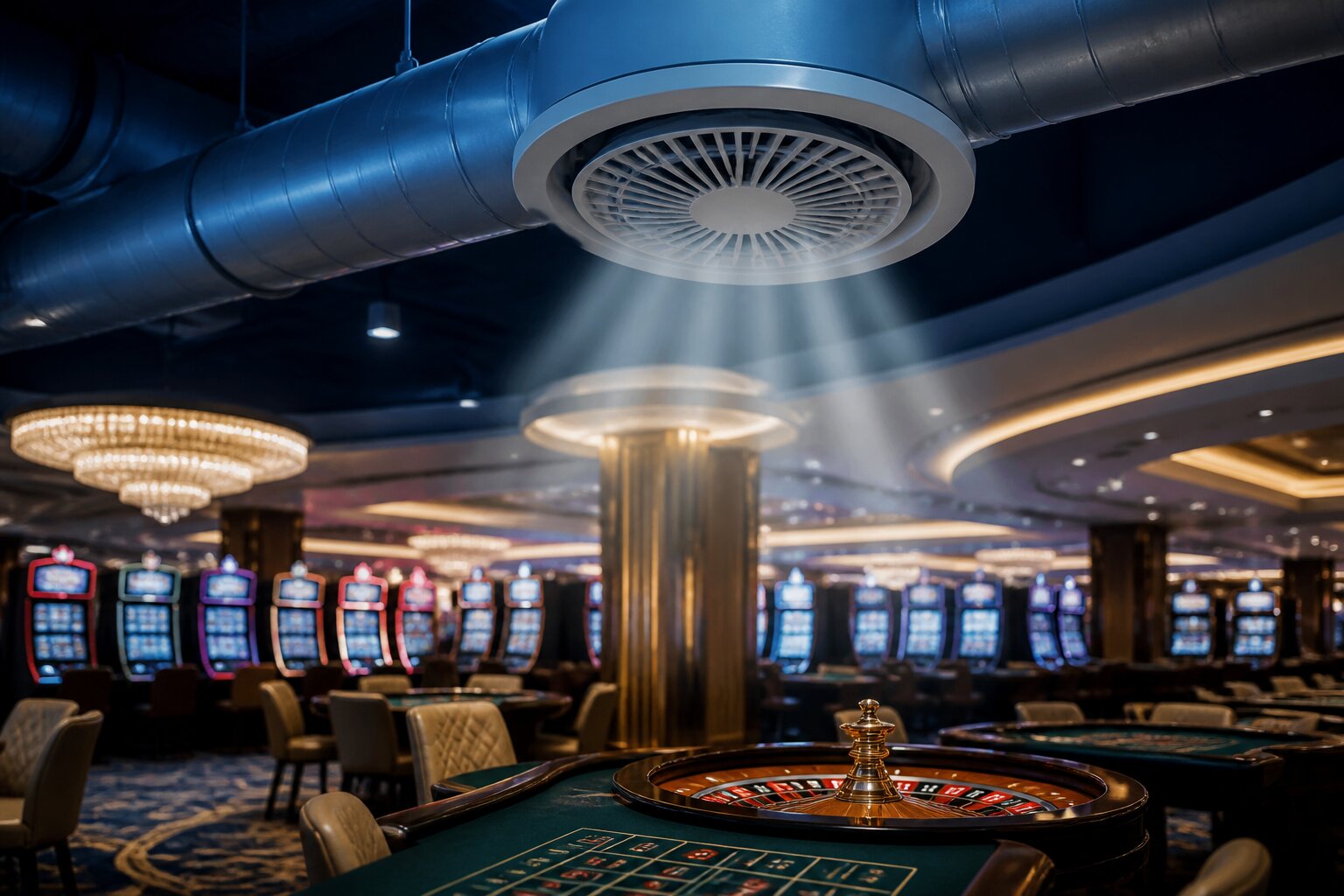
Have you ever heard someone say that casinos pump extra oxygen into the air to keep players awake and gambling for longer? It’s one of those stories that gets passed around, sparking images of hidden vents and secret casino tricks.
The claim crops up in films and pub conversations, and it’s easy to see why people find it believable: casinos are designed to be welcoming and immersive. If you want to know where the myth came from, why it persists, and what really happens to the air inside these venues, read on. The facts are more mundane — and safer — than the stories suggest.
Understanding Casino Air Conditioning and Ventilation Systems
Modern casinos are large, busy places full of people, lighting and electrical equipment, so they rely on robust heating, ventilation and air conditioning systems to keep conditions comfortable and safe.
These systems do the same jobs that you’d expect in hotels, shopping centres or cinemas: they control temperature, manage humidity, and circulate fresh air. Ventilation also helps remove smoke, dust and odours, which is especially important in any space with lots of visitors and machines. Regular maintenance and monitoring ensure filters and ducts work effectively and that the systems meet statutory health and safety standards.
In short, the air systems are about comfort, hygiene and regulatory compliance — not about altering how people behave.
Common Myths About Casino Air Quality
Rumours about secret tricks in casinos are common, and air quality is an easy target for imaginative explanations. Stories range from claims about extra oxygen to suggestions that venues use invisible chemicals to change moods.
Most of these ideas are unfounded. Pumping additional oxygen into an enclosed public space would create serious safety hazards around electrical equipment and is tightly restricted by health and safety rules. Similarly, while venues may use pleasant scents to enhance the atmosphere, there’s no evidence of anything being used to influence decisions or extend play covertly.
Separating myth from fact helps us focus on the real measures casinos use to create a pleasant environment — things like filtration, humidity control and sensible ventilation design.
The Origins of the Oxygen Myth
The oxygen story has a long life in popular culture, often amplified by films and anecdotes. Scenes portraying mysterious vents and whispered tactics make for good drama, but they don’t reflect standard practice.
Technically, increasing oxygen concentration in a public venue is both impractical and hazardous: it raises fire risk and would conflict with safety regulations. That combination makes the notion implausible as a real-world strategy. The most likely explanation is that a few early anecdotes were exaggerated and then reinforced by fiction and hearsay.
The Science Behind Oxygen and Human Behaviour
People are sometimes told that more oxygen will keep them more alert or energetic, which is why the oxygen myth sounds persuasive. Physiologically, normal atmospheric oxygen levels are sufficient for healthy brain and body function; small, short-lived changes in oxygen for medical or industrial purposes are managed in controlled settings, not public entertainment spaces.
No credible evidence shows that altering oxygen levels in a casino would improve concentration or change decision-making in meaningful ways. Because oxygen enrichment is hazardous around electrical systems and open flames, it is not used as an ambient modification. Instead, venues aim for optimal temperature, lighting and air freshness to reduce fatigue and discomfort — practical measures with clear benefits for wellbeing.
If you’re curious about how venues support alertness, it’s more accurate to look at lighting design, ergonomic seating and noise control than at air composition.
Are Enhanced Casino Environments Safe?
Keeping indoor air at appropriate temperature and humidity, and removing contaminants, contributes to a safer, more comfortable environment. These are standard engineering goals across public venues, and they help reduce headaches, drowsiness and irritation caused by poor air quality.
Safety frameworks require regular checks and maintenance of HVAC systems, with attention to filter changes, duct cleaning and monitoring for issues such as mould or excessive dust. Any use of scent is limited and regulated; strong odours are avoided because they could bother guests or cause allergic reactions.
Overall, what feels like an “enhanced” environment is the result of planned design and routine upkeep rather than any covert or risky interventions.
UK Regulations on Indoor Air Quality in Casinos
In the UK, legal requirements and industry guidance set out minimum standards for ventilation, temperature control and hygiene in public buildings. Casinos must comply with these rules to protect staff and visitors, and enforcement is carried out by relevant health and safety authorities.
Regulatory compliance covers design, installation and ongoing maintenance of HVAC systems. Records of servicing and inspections are kept to demonstrate that systems operate correctly. These expectations make it very unlikely that any venue would use unsafe or unapproved methods to alter atmospheric conditions.
Regulations are about duty of care: venues must provide a safe environment, and that responsibility limits any experimental or hazardous practices.
What Do UK Casinos Actually Do to Their Air?
Practically speaking, casinos focus on standard engineering solutions to maintain good indoor air quality. This includes strategic placement of air inlets and exhausts, regular filter replacements, humidity control and targeted ventilation in areas with high occupancy or equipment loads.
Independent inspections or audits confirm that systems meet required standards, and maintenance plans are in place to address faults promptly. When venues use scent, they typically select subtle, generally acceptable fragrances and diffuse them in low concentrations so they enhance rather than dominate the space.
These measures aim to create a comfortable, clean environment for visitors and staff while meeting legal and health obligations.
Truths Behind the Scented Air and Ambience
Scent and ambience are part of hospitality design in many indoor public spaces. When used modestly, scent diffusers and careful ventilation can make a room feel fresher and more pleasant without introducing any physiological effects beyond simple comfort. Thoughtful placement and timing of scent can enhance the experience without becoming intrusive.
Air filtration reduces dust and allergens, which matters in crowded venues. Regular maintenance of filters and ventilation systems helps keep the air clean and reduces the chance of complaints from sensitive guests. It also supports overall hygiene standards and can contribute to better perceived cleanliness.
Lighting and sound design also play a role in how comfortable people feel. Subtle changes to brightness, colour temperature and background noise levels can make a space feel calm or lively, depending on the intended atmosphere. These are deliberate design choices intended to make a visit pleasant and to support a safe environment for everyone inside.
There’s no secret chemistry at work, just considered choices about scent, filtration and environmental control. Operators should use mild, non-allergenic products where possible, monitor guest feedback and ensure staff are trained to adjust settings when needed. Regular checks ensure systems perform as intended and keep the environment welcoming for the widest range of visitors.
How Are Smokers and Non-Smokers Accommodated?
Since indoor smoking is prohibited in the UK, casinos provide outdoor smoking areas that keep indoor public spaces smoke-free. Inside, ventilation systems and spatial planning prevent outdoor smoke from circulating back into gaming floors and public areas.
Design choices such as seating arrangements, partitions and extractor fans in certain zones help maintain a clear separation between smoking and non-smoking areas. The indoor environment is therefore kept comfortable for those who do not smoke, while outdoor provisions meet the needs of smokers without compromising indoor air quality.
These arrangements reflect practical responses to law and guest comfort rather than any attempt to alter visitor behaviour.
What Should You Know as a Casino Visitor?
Visitors can expect air quality and comfort to be managed in line with legal standards and best practice. Smoking is restricted to designated outdoor areas, indoor spaces are ventilated and filtration is used where appropriate, and any scents are applied sparingly to avoid causing discomfort.
If you have particular sensitivities — for example to fragrances or noise — staff are usually able to point you toward quieter areas or offer assistance. Venues keep maintenance records and follow guidance to ensure systems work properly, so most concerns are logistical rather than systemic.
These practical arrangements aim to make your visit straightforward and comfortable while meeting safety requirements.
Key Takeaways: Myths Versus Reality
The idea that casinos pump extra oxygen into the air is a myth born from fiction and anecdote rather than engineering or health practice. In reality, air management in casinos is focused on comfort, hygiene and regulatory compliance. Ventilation, filtration and modest scenting are used to create a pleasant environment, and smoking is handled through outdoor designated areas.
Air quality measures are designed with safety in mind, and they do not alter gaming outcomes or influence decision-making in the dramatic ways suggested by the rumours. You can expect a well-maintained environment that prioritises guest and staff wellbeing.
If you’re visiting, enjoy the atmosphere with the reassurance that the venue follows the rules and that the systems in place are about safety and comfort — nothing secretive or hazardous.
**The information provided in this blog is intended for educational purposes and should not be construed as betting advice or a guarantee of success. Always gamble responsibly.