
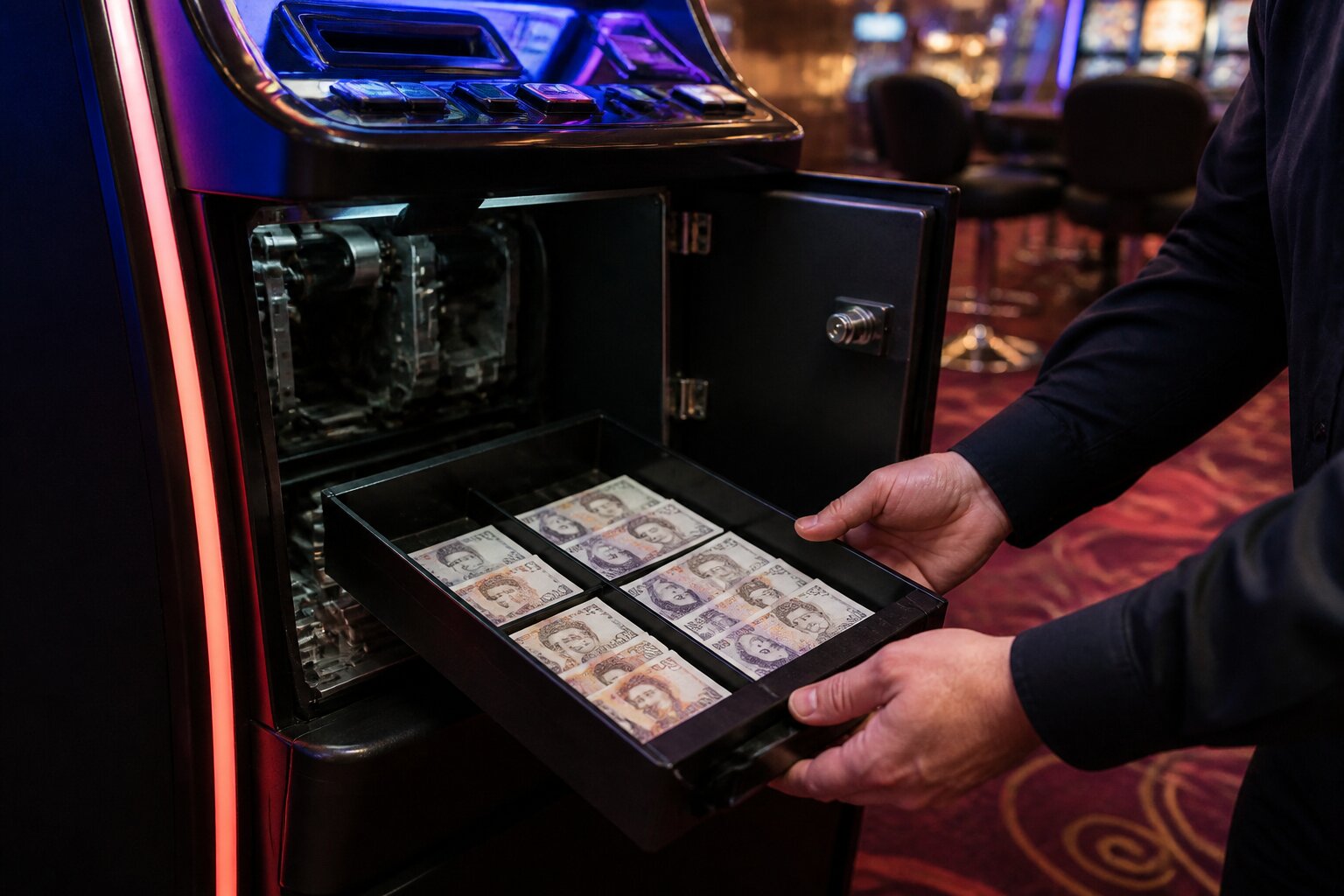
Ever wondered just how much cash a slot machine can really hold? Whether you’re spinning the reels in a casino or playing on a machine at a pub, there’s more happening behind the flashing lights than most people realise.
Stories about life-changing jackpots or overflowing coin trays can be colourful, but the reality is driven by engineering, accounting and strict rules. This article walks through machine capacity, how payouts are managed, and what operators do to make sure games run smoothly.
Read on to understand the systems behind the scenes and what they mean for anyone playing these games.
What Determines the Cash Capacity of a Slot Machine?
Several practical factors shape how much cash a slot machine can hold.
Physical design is the most obvious. Older mechanical machines were built to store large quantities of coins, whereas modern cabinets are slimmer and accept notes, tickets or electronic credits. Machines that use ticket-in, ticket-out (TITO) systems require little internal coin storage because wins are paid as printed tickets or account credits.
Security and handling procedures also limit capacity. Cashboxes are deliberately sized for frequent emptying, reducing the value at risk if tampering or theft occurred. Venues schedule regular collections so machines are not left holding large sums overnight or between shifts.
Regulation influences capacity too. Operators must meet standards for cash handling, machine maintenance and record-keeping. These rules ensure operators can account for money moving into and out of a machine and that cash storage is proportionate to the environment where the machine is located.
Different Types of Slot Machines and Their Typical Limits
Machines vary by category and by where they are placed, and those differences affect how much cash they typically hold.
In many venues you will encounter lower-stake pub machines, mid-range machines in arcades or betting shops, and higher-stake casino machines. Pub machines are designed for smaller transactions and usually have modest cashboxes. Facilities accepting notes or digital payments reduce the need for physical storage even further.
Machines in dedicated gaming venues are built around higher stake levels and prizes, so their internal capacities and monitoring are greater. In casinos, larger cabinets and electronic credit systems allow for higher theoretical payouts, but these are supported by more frequent auditing and tighter controls.
Across all types, modern practice tends toward limiting on-machine cash through TITO and central accounting. That means the visible coin tray rarely reflects the full value the machine can register as credit or payout.
How Are Slot Machines Emptied and Refilled?
Emptying and refilling machines is a routine but tightly controlled aspect of operation.
Collections follow a set schedule and are carried out by authorised staff. To maintain transparency, procedures require dual attendance for access to a cashbox and for refilling ticket printers or cash hoppers. Access uses secure keys or codes and each action is logged with time, staff IDs and amounts.
Where machines issue tickets or electronic credits, refilling involves replenishing ticket stock or checking network connections rather than handling large quantities of coins. All movements are recorded in the venue’s accounting systems so operators can reconcile machine totals with cash and ticket flows.
Regulatory oversight means operators keep detailed records of these procedures. Regular audits cross-check physical collections against electronic transaction logs to detect discrepancies quickly and ensure machines are ready to pay out when required.
Understanding Slot Machine Payouts and How They Work
Payouts are the result of a machine’s internal programming and approved design, not the physical amount of cash stored in the cabinet.
At the heart of each game is a Random Number Generator (RNG), a computer algorithm that determines outcomes at the moment of play. The machine’s payout characteristics are expressed through Return to Player (RTP), a percentage indicating the average amount returned over a long period. For instance, a 95% RTP suggests that, over extensive play, around £95 of every £100 staked would be paid back in wins, although short-term sessions can differ widely from this long-term measure.
Modern systems often pay winners via ticket or electronic credit rather than dispensing large volumes of coins, which decouples the machine’s visible cash from its ability to pay. Machines are certified and their payout parameters documented, and venues must ensure games operate within those approved specifications.
Why Don’t Slot Machines Run Out of Money?
Operators design and run machines so payouts are always available when a winning outcome occurs.
One reason is that many machines don’t rely on a physical store of coins to make a payment. Ticket-in, ticket-out systems, and centralised accounting mean a machine can issue a voucher or credit an account even when its coin hopper is low. For linked progressive or large jackpot prizes, separate accounting arrangements or insurance-backed funds are used to ensure the award can be paid regardless of on-machine cash.
Regular monitoring is another safeguard. Staff check levels and reconcile transaction logs frequently, and automated alerts can flag low hopper supplies or connectivity problems so staff can address them before they affect players. Combined with regulatory requirements for maintenance and audit, these measures prevent a machine from becoming unable to meet a legitimate payout.
If you’re wondering how often this matters in practice, venues are organised to keep machines ready for play through proactive checks and routine servicing.
How Often Are Payouts Made?
Payouts occur automatically based on the game result produced by the RNG and the machine’s payout table; they are not linked to a schedule of cash collections.
Some players see multiple small wins in a single session, while larger prizes are less frequent because of how the payout table is structured. Over time a machine will pay out according to its RTP and prize distribution, but individual playing sessions may show significant variation. When a machine needs to provide a large payment, common practice is to credit an account or issue a ticket and, for very large sums, to use separate administrative procedures to ensure the prize is paid promptly and securely.
Myths About Slot Machine Money Storage
Several persistent ideas about how machines handle money are simply misconceptions.
The notion that a machine must be physically “full” before it can pay a jackpot is inaccurate. Outcomes are determined by the game’s software, and payouts are accounted for in the machine’s systems and the venue’s records rather than being dependent on the amount of cash in the tray.
Similarly, the idea that a machine is “due” to pay after a run of losses misunderstands independence of outcomes. Every spin is generated independently by the RNG; previous results do not alter the probability of future ones.
Another common belief is that staff can influence when a machine pays out. In practice, venue personnel follow strict procedures for cash handling and maintenance but have no capability to change game outcomes. Operators and regulators require equipment to be tamper-proof and to maintain verifiable records so the integrity of each game is preserved.
Legal and Casino Regulations on Slot Machine Capacity
Legal frameworks set clear boundaries for how machines are managed and how much cash or credit they may hold.
Regulators require operators to establish and document cash handling policies, to limit on-machine storage appropriate to the machine type and location, and to maintain operational checks. These rules reduce theft risk and help ensure that payouts are delivered reliably.
Auditing and record-keeping are central. Operators must log collections, maintenance, and incident reports, and independent audits verify that the recorded transactions match physical and electronic records. For larger prizes or linked jackpots, separate reporting and payment mechanisms are in place so the full award can be honoured without depending on the contents of a single machine.
These regulatory measures protect both players and operators by making sure machines are operated transparently and that funds for valid payouts are available when needed.
This completes the detailed look at how slot machines store money, how payouts are handled, and why the systems behind the scenes are designed to keep play fair and payments reliable.
**The information provided in this blog is intended for educational purposes and should not be construed as betting advice or a guarantee of success. Always gamble responsibly.