
If you enjoy classic blackjack but want a variant that adds a new layer of decision-making, Blackjack Switch is worth a look. This guide explains how it changes the familiar game, what to watch for at the table, and how those rule tweaks affect strategy and outcomes.
You’ll find clear explanations, examples and practical points to check before you play so each section leads naturally into the next. Read on to learn how the switch mechanic works and how it alters the flow of the round.
What Is Blackjack Switch?
Blackjack Switch is a modern variation created in 2000 that keeps the core aim of blackjack—beating the dealer without exceeding 21—but changes how you manage your cards. The defining feature is that you play two hands simultaneously and, after the initial deal, you may swap the top cards between those hands. That single option reshapes many decisions you’d normally make.
Playing two hands creates different trade-offs compared with a single-hand game. You get more choices, but the rules for dealer outcomes and payouts are usually adjusted to balance those choices. These adjustments are what make Blackjack Switch feel familiar yet strategically distinct.
If you’re curious about how that one extra decision fits into the rest of the round, the next section breaks down the main rule differences you must know.
How Do the Rules of Blackjack Switch Differ from Classic Blackjack?
At first glance Blackjack Switch looks like standard blackjack, but a few rule changes materially affect play.
You receive two hands instead of one, and after the deal you can exchange the second card of each hand. That swap is the game’s core twist and is available only once per round, before any further actions.
Dealers are typically treated differently too. A dealer total of 22 commonly results in a push against non-natural hands, which offsets the player advantage created by switching cards. Payouts for a natural blackjack are also often lower—usually paid at 1:1 instead of 3:2—reducing the return when you hit a natural.
Rules on doubling down and splitting can vary by table, so it’s important to confirm those limits beforehand. Taken together, these variations change the pace and risk profile of each round compared with classic blackjack.
Now that you know the main rule differences, the following section outlines the flow of a round so you can see where the switch fits in.
Step-By-Step: How to Play Blackjack Switch
Below is a clear overview of a typical round and where the important decisions fall.
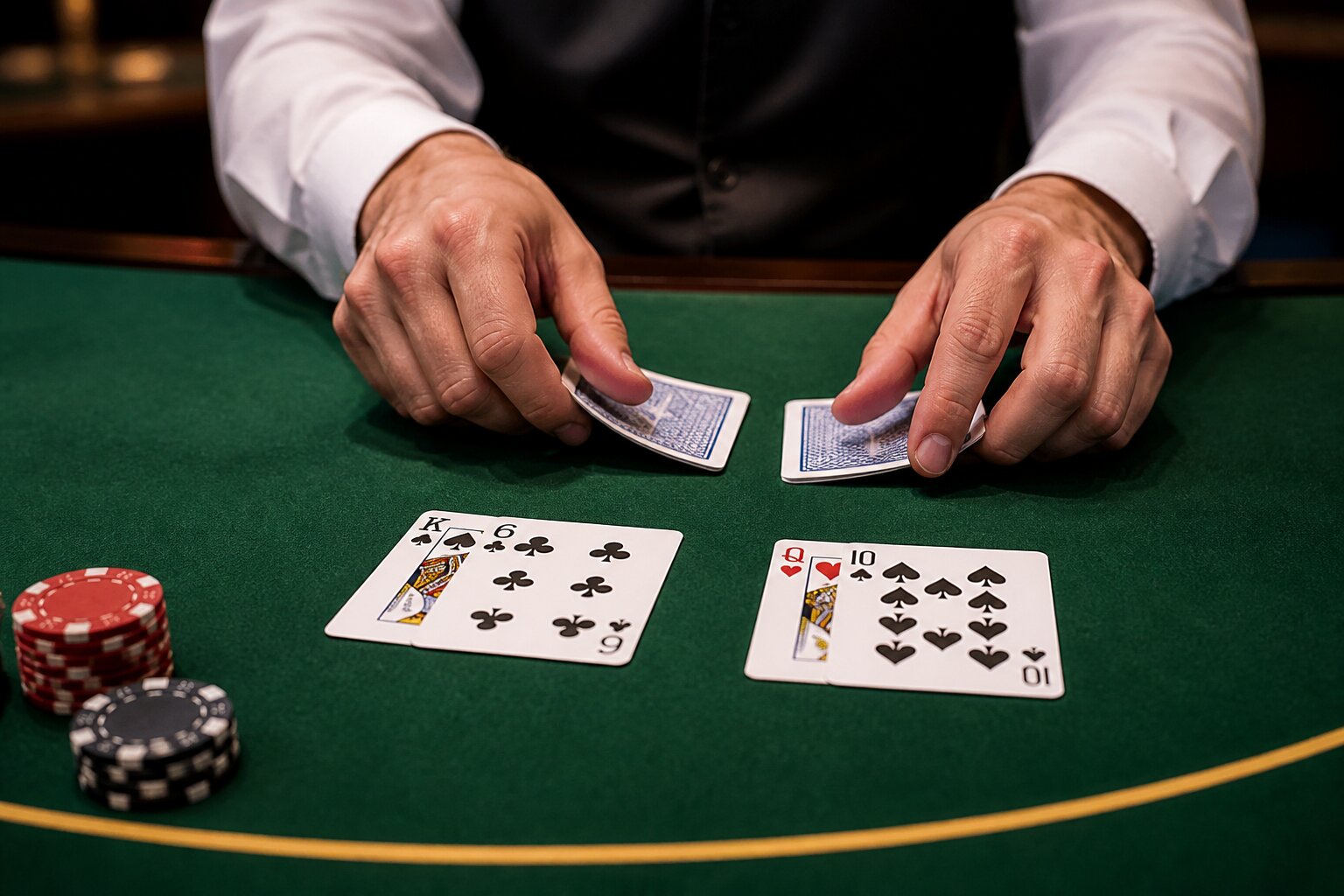
Start by placing equal bets on two hands; each stake must match the other. You are then dealt four cards—two for each hand, all face up—so you can assess both hands at once.
At this point you can choose to swap the second card between the hands if it improves your position, or leave the hands as dealt. That switching decision happens before any hits, stands or doubling down.
After the switch decision is made, play each hand independently. Choices such as hitting, standing or doubling (when permitted) are applied to each hand in turn. When both hands are finished, the dealer reveals their cards and completes their hand according to the house rules. Finally, each of your hands is compared separately to the dealer’s outcome, with the push-on-22 rule commonly in effect.
This structure gives you one early strategic choice that changes how you might play each hand afterwards. Next, we’ll look more closely at how switching itself works and why timing matters.
How Does Switching Cards Work in Blackjack Switch?
Switching is the unique mechanic that defines this variant and it’s worth understanding in detail.
Immediately after the deal, you may swap the second card from each hand. For example, if your hands were 10–6 and 9–7, swapping the second cards would create 10–7 and 9–6, which could turn two mediocre hands into one much stronger hand and one weaker one. This is a tactical trade-off: you may accept a weaker second hand to gain a stronger first hand, or maintain balance between both.
The swap is irrevocable for that round; once you move the cards and play continues, the new hands are fixed. Switching is only allowed once per round and must be declared before you take any other action. Because the dealer’s 22 can negate wins on non-natural hands, that anticipated outcome should be part of your switching calculation.
With that in mind, the next section examines the benefits and drawbacks players typically face.
What Are the Main Advantages & Disadvantages of Blackjack Switch?
Blackjack Switch offers extra tactical options but comes with offsetting rules that change the expected returns.
On the plus side, switching increases the number of meaningful decisions you have, and it can turn otherwise weak hands into competitive ones. Playing two hands at once can also reduce variance in some cases, since one hand’s outcome won’t necessarily determine the round.
On the downside, standard adjustments such as the push-on-22 rule and lower natural blackjack payouts reduce the long-term return compared with some classic blackjack tables. Restrictions on doubling and splitting at certain tables can also limit how you capitalise on a favourable switch.
Comparing Payouts & House Edge in Blackjack Switch
Payouts and house edge in Blackjack Switch are shaped to compensate for the switch option. A natural blackjack is generally paid at 1:1 rather than 3:2, and the dealer’s 22 often results in a push against non-natural hands. Both changes reduce the effective payout when you win.
Because of these factors, the overall house edge in many Blackjack Switch offerings tends to be higher than the most favourable classic blackjack rulesets, despite the extra choice players get. Always review a table’s paytable and rule list before joining, as variations between providers can meaningfully alter the house edge.
Understanding these trade-offs helps when deciding whether this variant suits your style and bankroll. The next section clears up common misunderstandings so you can make better-informed choices.
Common Myths About Blackjack Switch Debunked
Misconceptions can steer new players into poor decisions, so here are some common myths and the realities behind them.
Myth 1: “Switching cards always guarantees a better result.” The option to switch improves your control but does not guarantee better outcomes, because the dealer’s adjusted rules can offset the benefit.
Myth 2: “Blackjack Switch pays out more than classic blackjack.” In fact, most tables reduce the natural blackjack payout and apply rules that lower the overall return compared with generous classic rulesets.
Myth 3: “You should always switch when possible.” Whether to switch depends on the full context of both hands and the dealer’s upcard; prudent players weigh the likely outcomes rather than switching reflexively.
Clearing these up should help you approach the game with realistic expectations. Next, we’ll cover the behaviour and manners expected at the table so you blend in and keep the action flowing.
Essential Etiquette for Playing Blackjack Switch in UK Casinos
Whether you’re at a live table or playing online, good manners keep the game comfortable for everyone.
At a physical table, wait your turn and make your decisions without distracting others. Announce any switch clearly so the dealer can record it correctly, and handle chips and cash as directed by staff. Keep conversations light and avoid commenting on other players’ choices unless you’re invited to talk strategy.
Online, be mindful of chat etiquette and avoid spamming or giving unsolicited advice. In both settings, be aware of your own limits and budget before you join a table. That helps preserve a positive experience for everyone involved.
Having covered etiquette, the following FAQ answers practical questions many UK players ask.
Blackjack Switch FAQs for UK Players
This section addresses common practical queries so you can find what matters quickly.
Can I Play Blackjack Switch Online in the UK?
Yes, this variant is offered by many regulated online casinos. Check each site’s rules and table settings to be sure you understand the version they offer.
What Stakes Can I Play With?
Limits vary between venues. Tables range from lower-stake options for casual play to higher limits for more experienced players—always check min and max bets before joining.
Does the “Push on 22” Rule Always Apply?
Most versions include the push-on-22 rule, but it is not universal. Verify the specific table rules where you plan to play.
How is Blackjack Paid Out in this Game?
Natural blackjacks are commonly paid at 1:1 in Blackjack Switch rather than the 3:2 payout typical of some classic games. Always confirm the payout table at your chosen table.
Is There an Optimal Way to Play Blackjack Switch?
There are recommended approaches and strategy guides that consider switching decisions, but no method removes the house edge. Study the rule set, consider how the push-on-22 affects your choices, and play in a way that fits your goals and bankroll.
If anything in the rules seems unclear while you’re at the table, ask staff or consult the help section of the site you’re using. That ensures you’re making informed choices and enjoying the game responsibly.
Final thoughts: Blackjack Switch adds a distinct strategic element to a familiar game. Learn the rule changes, think through the switching trade-offs, and choose tables whose rules suit the way you like to play.
**The information provided in this blog is intended for educational purposes and should not be construed as betting advice or a guarantee of success. Always gamble responsibly.