
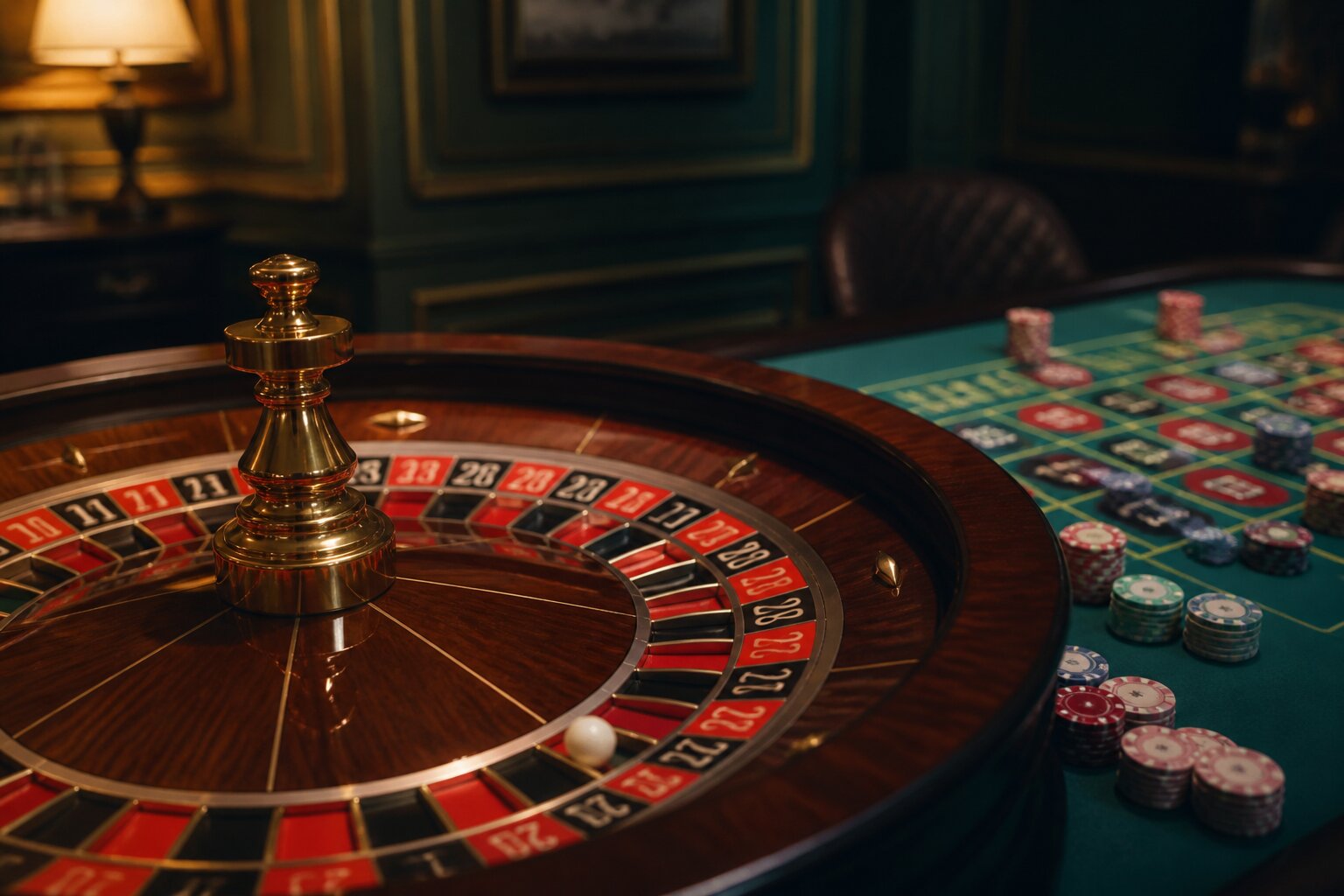
Ready to try a classic casino favourite with a little French flair? French Roulette is more than a spin of the wheel; it has distinct rules and table features that change how certain bets are treated and how the game feels at the table.
Whether you are new to roulette or refreshing your knowledge, this guide explains the wheel layout, the special rules that matter, and the common betting options so you can follow the action with confidence. All readers must be aged 18 or over.
What Is French Roulette?
French Roulette emerged in 18th century France and settled into the form many players recognise today. Its wheel contains 37 pockets, numbered 0 to 36, and the table uses French terminology for bets and sections. The game is closely related to European Roulette in structure, but it includes two particular rules, La Partage and En Prison, which affect even-money wagers when the ball lands on zero.
These rules reduce the house edge on certain bets and are central to what makes French Roulette distinct. The table also presents announced or call bets that map directly to wheel sectors, preserving a traditional feel that many players appreciate.
How Does The French Roulette Wheel Differ?
The French wheel has a single green zero and the numbers 1 to 36, arranged in a specific sequence that balances colours and odd/even numbers around the rim. This arrangement is the same as a European wheel, while American wheels add a double zero pocket and therefore use a different sequence.
Alongside the wheel, the betting area often includes a circular or racetrack-style layout for call bets, which relate to neighbouring sections on the wheel rather than to the main layout. These visual and structural details help players see how numbers are grouped and make it easier to place more specialised wagers.
You can expect the same core wagers as other single-zero games, but the presence of La Partage and En Prison on many French tables is what changes the practical outcome for some even-money bets.
What Do The Table Layout & Betting Options Look Like?
The table presents a central grid for inside bets, with clearly marked spaces across which chips are placed for straight numbers and small combinations. Outside bets appear around the grid and cover broader outcomes, such as colour, parity, and ranges of numbers.
Beyond inside and outside bets, French Roulette regularly shows areas for announced or call bets, with terms that refer to sections of the wheel. These include Voisins du Zéro, Tiers du Cylindre and Orphelins, which represent groups of numbers that sit next to each other on the wheel rather than together on the main grid. The layout makes it straightforward to select either focused single-number plays or broader coverage that tracks wheel geography.
If you are unfamiliar with the table markings, take a moment to review them before staking chips. A quick glance at the racetrack section clarifies which numbers a call bet covers, helping you match your strategy to the wheel.
Understanding French Roulette Rules & Terminology
French Roulette uses many French terms for betting options, and it helps to be familiar with the common names so you can identify bets at a glance. Single-number bets are called en plein, a two-number split is cheval, three-number row bets are transversale, a four-number corner is carré, and bets covering six numbers in two adjacent rows are sixain. Dozens and column bets are described similarly to other roulette variants.
Two special rules influence how even-money bets are resolved if the ball lands on zero. La Partage returns half the stake on qualifying even-money bets, while En Prison keeps the stake on the table for the next spin under the condition that a successful next spin returns the original stake rather than a profit. These rules are aimed at reducing the effective house edge for those specific wagers.
Familiarity with these terms and rules makes it easier to interpret dealer announcements and to choose bets that align with your preferred approach.
What Are The Payouts In French Roulette?
Below are the standard payout ratios you can expect in French Roulette, shown after a short introduction to the table results. These reflect typical casino practice where different bet types carry fixed returns.
- Straight Up (En Plein): pays 35 to 1 for a single number.
- Split (Cheval): pays 17 to 1 for a bet on two numbers.
- Street (Transversale): pays 11 to 1 for a three-number row bet.
- Corner (Carré): pays 8 to 1 for a four-number square.
- Six Line (Sixain): pays 5 to 1 for six numbers across two rows.
- Dozens/Columns: pays 2 to 1 for a group of 12 numbers.
- Even-Money Bets: pays 1 to 1 for red/black, odd/even, or high/low.
These payout ratios remain consistent across most single-zero roulette games, but the practical expectation for even-money bets is improved at tables that apply La Partage or En Prison.
Exploring Unique Rules: La Partage & En Prison
La Partage and En Prison apply only to even-money wagers when the ball lands on zero, and they change how those stakes are resolved. With La Partage, half of an even-money stake is returned and the other half is lost when zero appears. En Prison leaves the stake on the table for the next spin; if the bet wins on that subsequent spin, the original stake is returned.
Both options lower the long-term cost of betting even money compared with a game that simply takes all losing bets on zero. They do not alter the payouts for numbered bets, but they are particularly significant for players who favour red/black or odd/even choices. Knowing whether a table uses La Partage, En Prison, or neither helps you estimate the effective expected return for different bets.
How Do You Play French Roulette Step By Step?
Under this heading the mechanics are described as a continuous sequence rather than as a set of instructions. At the table, players place chips on the numbers or areas that represent their chosen bets during the betting window. Dealers then close betting, spin the wheel and release the ball. When the ball settles in a pocket, the dealer announces the winning number and marks it on the table.
Payouts follow the published ratios and any bets affected by La Partage or En Prison are resolved according to those rules. Losing chips are cleared away and players who wish to continue place new bets for the next round. Online play mirrors this flow, with the system handling spins, results and payouts on the same basis.
Is French Roulette Better Than Other Roulette Types?
Deciding which roulette variant suits you depends on what aspects of the game matter most. French Roulette offers the single-zero wheel and, when present, La Partage or En Prison, which reduce the effective house edge on even-money bets. European Roulette shares many features with French Roulette but often does not include those particular rules. American Roulette adds a double zero, creating a slightly larger house edge for comparable bets.
If you favour bets that cover broad outcomes such as red/black or odd/even, the special French rules may be meaningful to your choices. If your interest lies in announced or call bets tied to wheel sectors, the French layout and racetrack make those easy to use. Trying different versions in low-stakes play provides a practical sense of how rules and layout influence the experience.
Play sensibly, set limits before you begin, and treat the game as a form of entertainment rather than a means of making money.
This guide has covered the wheel, table layout, terminology, payouts and the special rules that define French Roulette. With that context, you should be able to read a table quickly and choose bets that match your style. If you want to try a few spins, take your time to review the table and enjoy the experience responsibly.
**The information provided in this blog is intended for educational purposes and should not be construed as betting advice or a guarantee of success. Always gamble responsibly.