
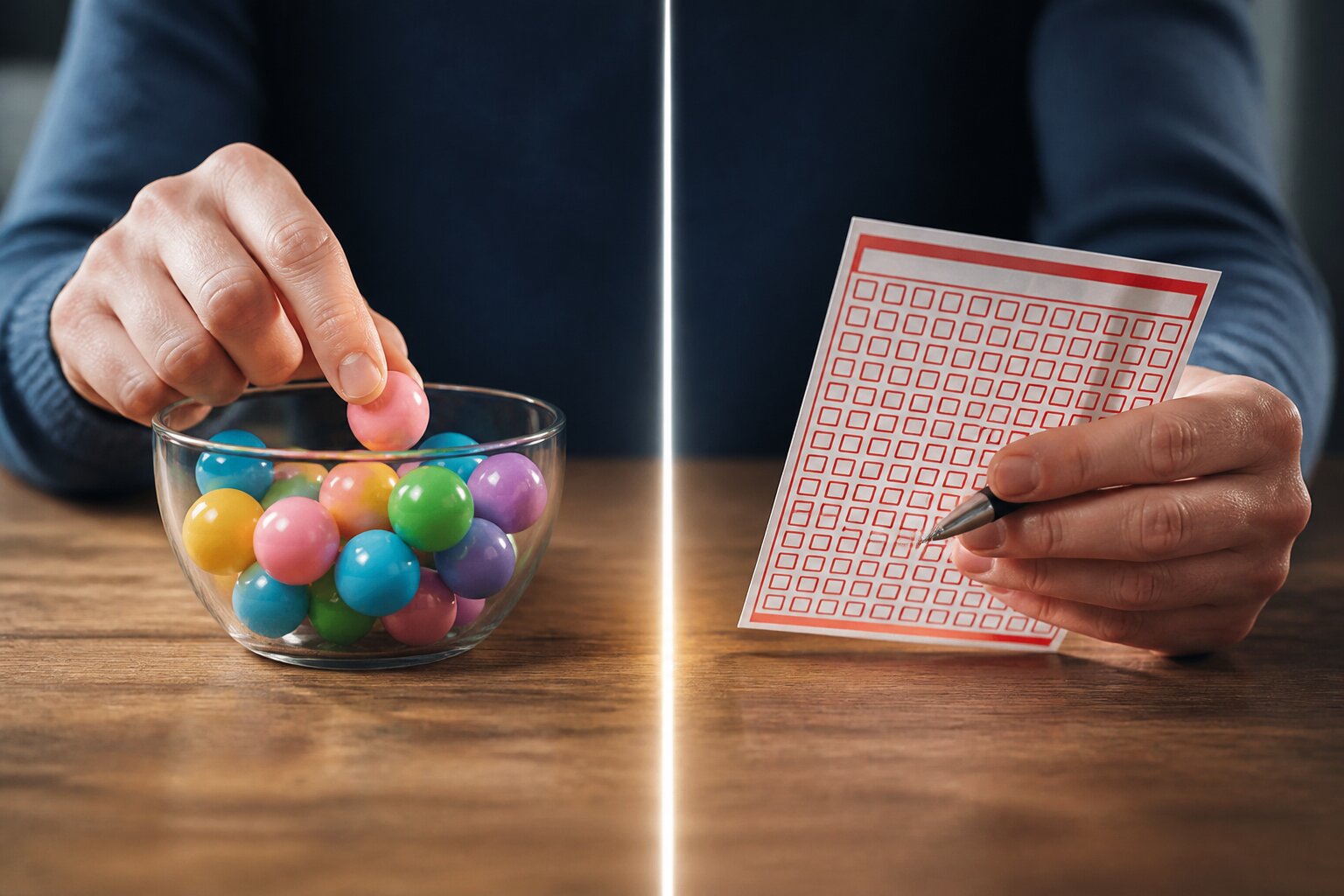
Every lottery fan has asked it at some point – should you leave number selection to a Lucky Dip, or stick with your favourite own numbers?
The question comes up in office sweeps, family chats, and whenever the jackpot grows. Is there any real advantage to one method, or are they effectively the same?
If you want a clear, fact-based look at how the two approaches compare, this article walks through the mechanics, the data and the common beliefs so you can pick the approach that suits you.
The Basics: What Are Lucky Dip and Own Number Selections?
When you buy a ticket, you can usually choose between a Lucky Dip and manually entering your own numbers.
A Lucky Dip uses a computer to generate numbers for you, with no input from the player. It is the fastest way to get a ticket and suits anyone who prefers not to think about specific combinations. Choosing your own numbers means you select each figure yourself — often dates, anniversaries or personally meaningful digits, though some players simply select numbers deliberately rather than at random.
Both options lead to a standard ticket used in the draw. The distinction matters only for how the numbers are chosen, not for how they are treated once the draw happens. Next, we’ll look at how those draws are run so you can see why the selection method does not alter the outcome.
How Are Lottery Numbers Drawn in the UK?
Numbers are drawn using equipment and procedures designed to ensure fairness and impartiality. Machines mix numbered balls and then select the required quantity; every ball is intended to have an equal opportunity of being picked. Independent adjudicators oversee the process, and there are audits and tests to confirm the integrity of the equipment and procedures.
Regulation and oversight mean the draw process does not favour any particular ticket or method of selection. Because the draw itself is neutral, the way numbers are chosen beforehand—whether randomly by a machine or manually by a player—has no influence on which numbers are drawn. With that foundation in place, we can consider whether the choice of selection method changes your chances.
Does Lucky Dip Increase Your Chances of Winning?
No. The method used to pick numbers does not change the probability of winning. Every possible number combination on a ticket shares the same statistical chance of appearing in a draw, regardless of how those numbers were chosen.
Some players think machine-generated numbers might reduce the chance of sharing a prize, since they avoid common patterns such as low-number date-based combinations. While that can affect how many winners share a prize if your numbers are drawn, it does not alter the base likelihood of any ticket being a winner. This distinction between the chance to win and the chance of having to share a prize is worth keeping in mind as you decide how to play.
Why Do Some Players Prefer To Pick Their Own Numbers?
Many players enjoy the direct involvement of choosing numbers. Personal selections can make the experience feel more meaningful — dates and other significant figures often provide an emotional connection to a ticket. That connection can make checking results more engaging and can turn the draw into something to anticipate.
Beyond sentiment, choosing your own numbers gives a sense of involvement. Selecting familiar numbers or following a pattern can feel purposeful, even though the draw’s outcome remains governed by chance. For some, that small measure of participation is the point of playing. The next section examines how past results are treated and whether history sheds light on which method performs better.
What Does Lottery Data Say About Lucky Dip vs Own Numbers?
Historical jackpots show winners using both Lucky Dip and manually chosen numbers. A higher number of Lucky Dip winners is sometimes reported simply because many players opt for that quick method. Conversely, picked numbers that rely on commonly used values—such as dates—can lead to multiple winners sharing a prize when those figures come up.
It’s important to understand that past draws do not predict future results: every draw is independent. Data can illustrate patterns in player behaviour—like which number ranges are used most—but it cannot demonstrate that one selection method yields better odds. The next part looks at a few myths that arise from misreading such trends.
Common Myths About Lucky Dip and Own Number Odds
Several misconceptions crop up repeatedly. One is that machine-generated numbers are somehow more likely to win; another claims personally chosen numbers will influence outcomes if they follow a meaningful pattern. Both are incorrect because the draw is carried out without reference to how numbers were selected.
A related myth suggests numbers that have not appeared recently are “due” to appear. In truth, the independence of each draw means no number becomes more or less likely as a result of previous results. Likewise, avoiding common number ranges may reduce the likelihood of sharing a prize but does not change the chance of a ticket matching the drawn numbers.
These points help separate behaviour-based strategies from any expectation of improved odds. With that clarified, it’s useful to consider whether choosing numbers affects the chance of sharing a jackpot.
Does Choosing Your Own Numbers Guarantee You Won’t Share Jackpots?
Picking your own numbers does not guarantee a solo win. If someone else plays the same combination, the prize is shared between all tickets with those winning numbers. Personal choices that cluster around popular ranges—such as dates between 1 and 31—tend to have a higher chance of being duplicated by other players, increasing the risk of sharing.
That said, any combination, however unusual, can be matched by coincidence. There’s no reliable way to ensure a number set will be unique, so decisions about which numbers to play are mainly about personal preference and how one feels about the possibility of sharing a prize. The following section summarises the pros and cons to help you decide which approach fits you best.
Should You Change Your Approach? Pros and Cons Summed Up
Both options have clear advantages. Lucky Dip is quick and avoids commonly chosen patterns, which can reduce the chance of splitting a prize. Choosing your own numbers makes the experience personal and can be more enjoyable for those who value involvement.
Neither method improves the statistical chance of winning. If the goal is minimal effort and broader coverage of the available number range, Lucky Dip suits that preference. If playing feels more rewarding when personalised, manual selection offers that satisfaction. Whichever route you pick, treat play as entertainment: set spending limits and keep participation affordable for you.
This clarification brings the discussion to a final comparison so you can choose with confidence.
Conclusion: Which Option Really Wins More?
There is no advantage for either Lucky Dip or own-number selection in terms of winning probability. Both have produced winners, and both are treated equally in the draw. The practical differences come down to convenience, how often numbers may be shared, and personal preference.
Choose the method that makes playing the lottery enjoyable and sustainable for you. Play within set limits, and view tickets as entertainment rather than a financial strategy. That way, the experience stays enjoyable and balanced, whichever number-selection route you take.
**The information provided in this blog is intended for educational purposes and should not be construed as betting advice or a guarantee of success. Always gamble responsibly.