
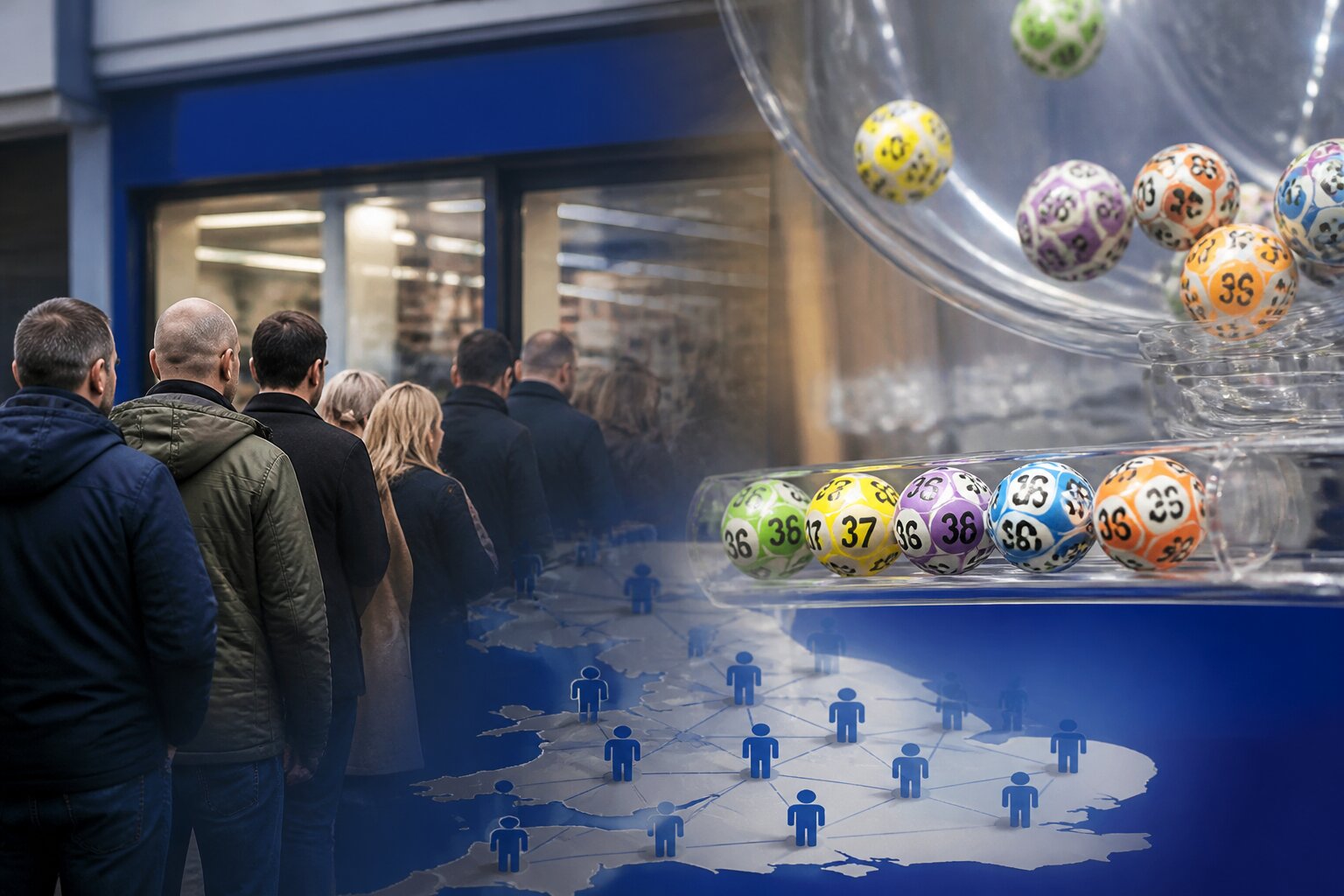
Every Tuesday and Friday night, millions across the UK check tickets, imagine what a big jackpot would mean for them and decide whether to pick their own numbers or use a quick pick. The shared anticipation is a familiar ritual for many households and workplace syndicates alike.
If you’ve ever wondered how many people actually enter each draw, the figures are revealing and tell a story about how the game brings together a wide range of players across different countries.
From participation patterns to how the totals are calculated, the numbers uncover interesting trends that go beyond headline jackpots.
EuroMillions Participation: How Many People Enter Each Draw?
On a typical Tuesday or Friday, between 18 and 30 million entries are recorded across all nine participating countries. The UK commonly accounts for around 8 to 10 million of those entries in a regular week, with totals often rising sharply when the jackpot rolls over or a special draw is announced.
Large jackpots attract a broader audience, including casual players and more organised syndicates at work or among friends. For instance, when the record £195 million jackpot was offered in July 2022, entry numbers across Europe climbed into the tens of millions. Although ticket volumes vary week to week, the pattern is consistent: bigger advertised prizes usually lead to bigger crowds of players.
Participation numbers reflect entries rather than unique individuals. That distinction helps explain why the same draw can show very large entry counts even if the number of distinct players is lower. Next, we’ll look at exactly how those entries are counted and reported.
How Are EuroMillions Player Numbers Calculated?
Player numbers are calculated by totalling tickets sold for each draw, since every ticket or line represents a separate entry. Multiple lines bought by one person are each counted, and syndicate purchases are tallied by ticket count rather than by the number of participants in the group.
Lottery operators compile sales from retail outlets and online platforms and report the aggregate as the draw’s participation figure. This approach gives a clear measure of entries but means the headline totals describe tickets, not individual players. Understanding this distinction helps interpret sales figures and avoids mistaking high entry counts for equally high numbers of unique participants.
With that in mind, the next section examines where those entries come from geographically and which countries contribute the most.
Geographical Trends: Where Do Most EuroMillions Players Live?
EuroMillions is played across nine European countries, and the UK is one of the biggest contributors to overall ticket sales. Other significant markets include France, Spain, Portugal, Ireland, Belgium, Luxembourg, Austria and Switzerland. Each country’s contribution reflects its population size, lottery culture and promotional activity.
These factors interact in different ways. Population determines the potential pool of players, while long-established lottery traditions and public attitudes towards gambling shape how many people actually buy tickets. Promotional activity and the way tickets are sold, whether online or at retail outlets, also influence sales patterns between countries.
UK Ticket Sales vs Other Countries
The UK often provides about a quarter to a third of all tickets sold for a typical draw. France regularly posts similar figures, while Spain and Portugal also contribute substantial volumes. Smaller countries such as Luxembourg and Austria sell fewer tickets simply because of their smaller populations.
Within those headline figures there is further variation from draw to draw. Large jackpots or special events can temporarily boost sales in particular markets, while changes to national advertising or retail availability can shift longer term trends. Cross-border purchases and online sales have also altered the balance over recent years.
Population Ratios and Regional Lottery Popularity
Measured against population size, some smaller nations show especially active participation. For example, Portugal and Ireland frequently have higher per-capita ticket purchase rates than larger countries. In the UK, a commonly cited estimate is that roughly one in seven adults buys a EuroMillions ticket with some regularity, indicating broad reach across regions and demographics.
These regional differences help explain why sales figures do not map directly to population. Cultural acceptance of lotteries, the frequency of play, and local marketing efforts all play a part. Together, these geographical patterns show how a single draw can unite players from cities and rural areas across several countries, and they set the scene for understanding overall sales figures in more detail.
Understanding EuroMillions Ticket Sales Figures
Ticket sales figures refer to the number of individual tickets or lines purchased for a draw, regardless of whether they were bought in a shop or online, and regardless of who is behind each purchase. So a report of 28 million tickets sold means 28 million separate entries were logged for that draw.
Major jackpots and Superdraws can push these totals much higher than in an average week. For example, UK sales often climb to around 9 million or more for big events, while the combined European entries may surge past 30 million. Because each ticket stands alone in the entries count, these figures are useful for measuring public engagement but do not change the statistical odds attached to any single entry.
Having clarified how sales are reported, the next section explores the factors that drive people to buy tickets in the first place.
What Factors Influence EuroMillions Player Numbers?
A number of forces shape weekly participation: jackpot size, special draws, promotions and broader social or economic conditions. Media coverage of large prizes tends to increase awareness and prompt more people to consider buying tickets, while events that guarantee additional prizes also draw attention and encourage short-term interest.
Other practical factors also matter. Changes in how easy it is to buy tickets, such as the growth of online sales and mobile apps, make it simpler for casual players to take part. Advertising and publicity campaigns, whether from the lottery operator or media reports about big winners, raise visibility and can influence how many people enter a particular draw.
Public perceptions of value and risk play a role too. In tougher economic times, discretionary spending generally falls, which can reduce participation. Conversely, when people feel more financially secure they may be more willing to spend on leisure activities, including a lottery ticket. Price changes, special offers and the availability of syndicate play also affect how participants judge the cost and potential return.
Social and cultural moments have an impact as well. Holiday periods, major national events or a general increase in leisure activity can shift buying patterns. Localised promotions or national campaigns tied to a specific date or celebration may also produce temporary spikes in entries.
Impact of Jackpot Size on Participation
Jackpot size is a clear influence. When the top prize climbs after several rollovers, it tends to attract greater attention and draws in casual players who might not otherwise buy tickets. High-profile examples show substantial spikes in entry numbers when the advertised prize reaches record levels or when a guaranteed sum is put on offer.
However, larger jackpots do not guarantee sustained growth in participation. The initial surge often fades over subsequent draws, and overall long-term player numbers depend on a mix of factors including ticket availability, public confidence and competing leisure opportunities.
Special Draws and Promotions Effect
Special draws such as Superdraws or national prize promotions temporarily shift the balance of participation by offering guaranteed large prizes or extra mechanics that make the draw stand out. These events encourage both regular players and occasional purchasers to take part, creating short-term increases in sales.
Promotions can also change behaviour around particular draws. For example, added prizes, multiplier features or collaboration with retail partners can make a specific draw more attractive. That said, these boosts tend to be intermittent and are usually followed by a return to more typical sales levels once the promotion ends.
Other moments that affect participation include holiday periods or national events that change buying patterns. Overall, these factors combine to produce the familiar ebb and flow of ticket sales across the year. The following section looks at how popularity has evolved over time.
How Has EuroMillions Popularity Changed Over Time?
Since its 2004 launch, EuroMillions has stayed a prominent part of the European lottery scene. Early enthusiasm was driven by the novelty of a multinational lottery with very large top prizes, and subsequent changes—such as adjustments to the number pool and the introduction of guaranteed big jackpots—periodically refreshed public interest.
Participation has seen both highs and lows. Notable large jackpots and promotional changes have produced spikes in ticket sales, while quieter periods, economic uncertainty or temporary changes in consumer behaviour have led to slower weeks. For example, sales dipped during the 2020 pandemic as purchasing habits shifted, then recovered as routines normalised and headline jackpots returned.
Despite fluctuations, EuroMillions has maintained a strong presence among weekly draws, with millions of entries submitted consistently across the participating countries. That long-term picture helps explain why the game remains central to many players’ routines. The final section pulls these threads together and offers a closing perspective.
The Bottom Line: EuroMillions Player Figures Explained
EuroMillions attracts millions of entries every week across the UK and Europe, with participation rising sharply for large jackpots and special draws. Ticket sales are reported as entry counts, so the totals reflect the number of individual tickets purchased rather than the number of unique players. The UK is regularly one of the largest contributors to those totals, while smaller nations often show high per-capita participation.
Sales trends respond to prize size, special events and wider social factors, and they have changed over time as the game has evolved. The statistics are useful for understanding the scale of engagement, but they do not alter the chance attached to any single entry. If you take part, make sure you do so only if you are aged 18 or over and within limits you set for yourself.
**The information provided in this blog is intended for educational purposes and should not be construed as betting advice or a guarantee of success. Always gamble responsibly.