
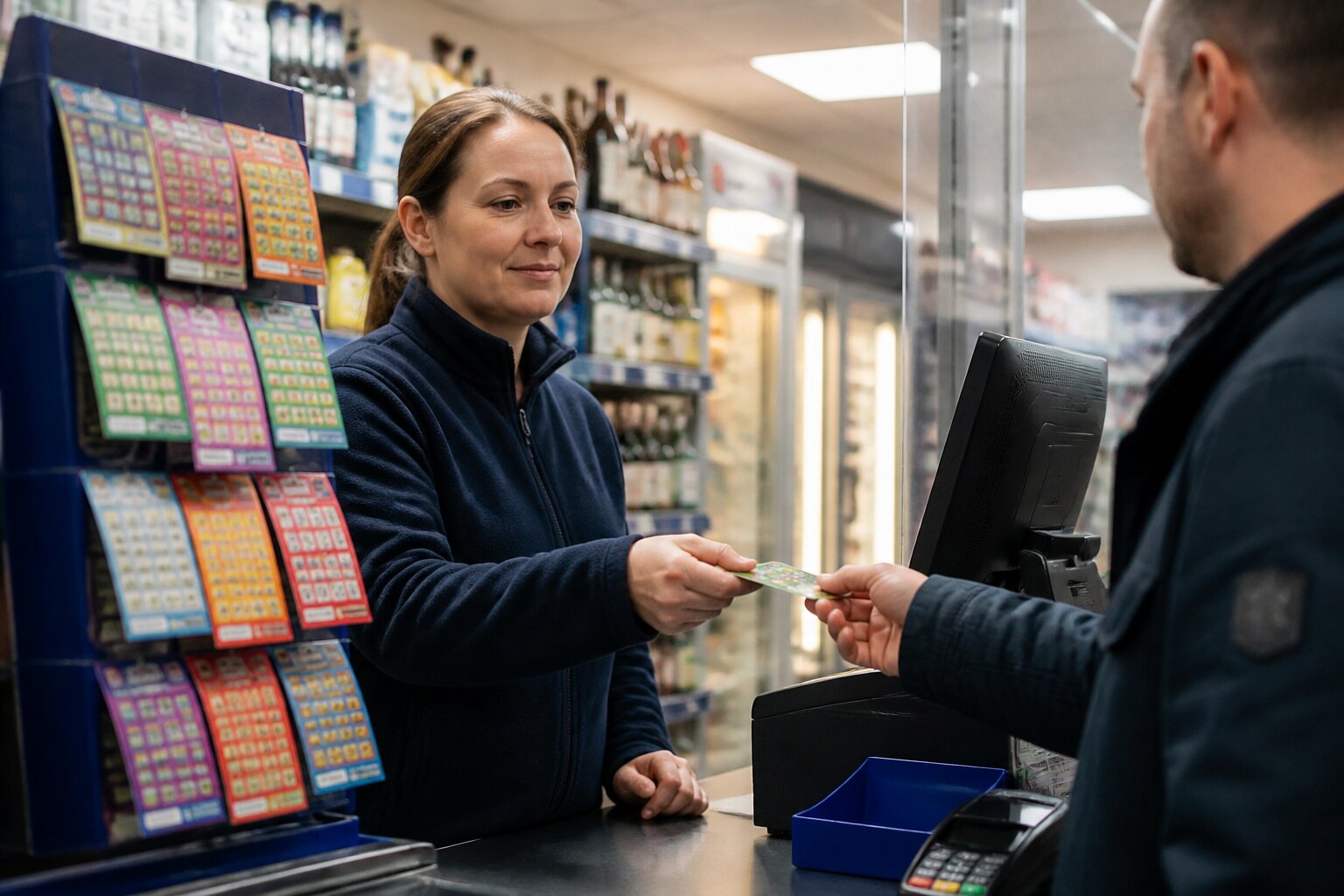
Ever dashed to the corner shop with a scratch card in hand, wondering if you’re cutting it fine? Whether you need to buy one before the tills close or cash in a small win after work, knowing when sales and payouts end can save you fuss.
Scratch cards are widely available across the UK, but opening hours, terminal availability and store practices all affect when you can buy or claim. The next sections explain those factors in practical detail and show what to expect in different retail settings.
Typical Scratch Card Sale Hours in UK Shops
Most retailers sell scratch cards during their normal trading hours. Supermarkets often offer them from early morning until late evening, matching the store’s opening and closing times; some branches open around 7am and close as late as 10pm or 11pm. Smaller convenience stores and newsagents tend to open earlier and close at varying times, sometimes as late as midnight in urban areas, or much earlier in rural locations.
Even when a shop is open, sales can stop a little before closing. Staff sometimes shut down the National Lottery terminal early to cash up, or a terminal may be taken offline for maintenance. Also, a shop can run out of specific games, particularly during busy periods. These practical limits mean it’s wise not to wait until the last minute if you need to buy or check a card.
The following section looks at how these practices differ between retailers and what that means for your chances of buying or cashing a card late in the day.
Do All Retailers Follow the Same Scratch Card Selling Times?
There isn’t a single national cut-off for scratch card sales. Each retailer sets its own opening hours and internal procedures, so two branches of the same chain can behave differently. Larger stores with extended hours tend to sell for longer, but they may still shut the lottery terminal earlier than the shop closes. Smaller independents often stop sales sooner to prepare tills for the evening.
The key constraint is whether the National Lottery terminal is online and whether the retailer wants to process transactions at that time. If you need to buy or claim late, try to call ahead to confirm a branch’s approach, especially in areas where late hours are uncommon.
Next we’ll check how Sundays and bank holidays affect availability and what to expect on those days.
Are Scratch Cards Available on Sundays and Bank Holidays?
Yes, scratch cards can be sold on Sundays and bank holidays, but availability depends on each retailer’s opening hours. Many supermarkets operate limited hours on Sundays—often mid-morning to late afternoon—and bank holiday hours can be reduced or different altogether. Smaller shops may close entirely or run a shortened schedule.
Because trading hours are typically narrower on these days, the window to buy or claim a card is often smaller. Retailers may also have different staffing levels, which can affect services such as prize verification and returns. Planning ahead and checking a store’s published hours will help avoid disappointment, and calling ahead or checking a retailer’s website can save time.
The following regulations section explains the legal framework that underpins those store practices. Remember that age restrictions and ID checks still apply regardless of the day, and prize claim procedures remain the same whether you buy a card on a weekday, Sunday or bank holiday.
Regulations Governing Scratch Card Sales in the UK
Scratch card sales are governed by gambling regulation intended to keep play fair and protect customers. Retailers who sell National Lottery products must be authorised to do so and must follow rules covering age verification and responsible selling practices.
Shops are required to ensure terminals are only used while authorised and must refuse sales to anyone under 18. Staff are trained to apply age checks and to recognise signs that a customer may be vulnerable. Non-compliance can result in penalties or loss of authorisation, which is why most retailers take these duties seriously.
With those rules in place, the next section focuses specifically on age limits and the types of ID that are accepted at the till.
Age Restrictions & Proof of ID Requirements
You must be at least 18 to buy or claim a scratch card. Retailers commonly use a “Think 25” approach, asking for proof of age if a customer looks under 25. Accepted ID typically includes a passport, photo driving licence, or a government-approved proof-of-age card.
Because selling to anyone underage is a serious offence, staff apply these checks consistently. If you think you might be asked for ID, having one of the accepted documents ready avoids any delay at the till.
The next section explains what happens when shops run out of stock or stop sales early, and where you can turn instead.
What Happens If a Shop Sells Out or Stops Early?
Shops may sell out of specific scratch card games or end sales before closing for operational reasons, such as cashing up or a terminal shutdown. Smaller stores are more likely to run low on stock or to restrict payouts if they have limited cash in the till.
If a retailer cannot sell or pay out, a straightforward option is to try another nearby outlet. Where that isn’t convenient, digital alternatives provide another route: the next part explains online availability and how payouts are handled for different prize levels.
Can You Buy Scratch Cards Online Instead?
Digital instant-win games are available through the official National Lottery website and app, as well as through other authorised operators. These work like physical scratch cards in terms of gameplay and prize structure, and online age verification ensures only those aged 18 or over can play.
Online purchases sidestep the stock and opening-hour issues of physical shops, and winnings are usually paid directly into an account rather than needing a cash payout from a retailer.
Where Can You Cash Winning Scratch Cards?
Small wins—typically up to £100—can usually be claimed at most authorised retailers if they have sufficient cash in the till. Larger prizes, roughly between £100 and £500, generally require a larger store with a connected terminal. For prizes above that, specific claims procedures apply: postal claims to the lottery operator or an arranged payout for major prizes are the usual routes.
Always sign the back of a winning card to protect it, and follow the operator’s official guidance for claiming larger amounts. With the practicalities of buying and claiming covered, the next section offers tips to avoid last‑minute frustrations.
Tips for Avoiding Disappointment When Buying Scratch Cards
- Check your chosen shop’s published opening hours before you go, especially on Sundays and bank holidays.
- Ask staff when they expect to stop selling scratch cards that day, since tills or terminals may be shut early.
- Call ahead if you want a particular game or need to confirm a retailer can pay a prize of a given size.
- Carry a valid form of ID if you might be asked to prove you are 18 or over.
- Be aware that smaller outlets may have limited cash for payouts, so plan claims accordingly.
These practical checks reduce the chance of a wasted trip and make it easier to buy or claim when you need to.
The Bottom Line: Understanding Scratch Card Availability in the UK
Scratch card availability is shaped by shop trading hours, terminal connectivity and regulatory safeguards. There’s no single nationwide closing time for sales; instead, expect variation between supermarkets, convenience stores and independents, and between regular days, Sundays and bank holidays.
Where a retailer cannot sell or pay out, options include visiting another outlet or using authorised digital services. Retailers must enforce age limits and adhere to established selling practices, so carrying ID and checking hours in advance will usually solve any practical problems.
If you need the latest guidance on claims or online options, visit the official provider’s website. A little planning makes buying or cashing scratch cards straightforward, so you can avoid surprises and handle winnings smoothly.
**The information provided in this blog is intended for educational purposes and should not be construed as betting advice or a guarantee of success. Always gamble responsibly.