
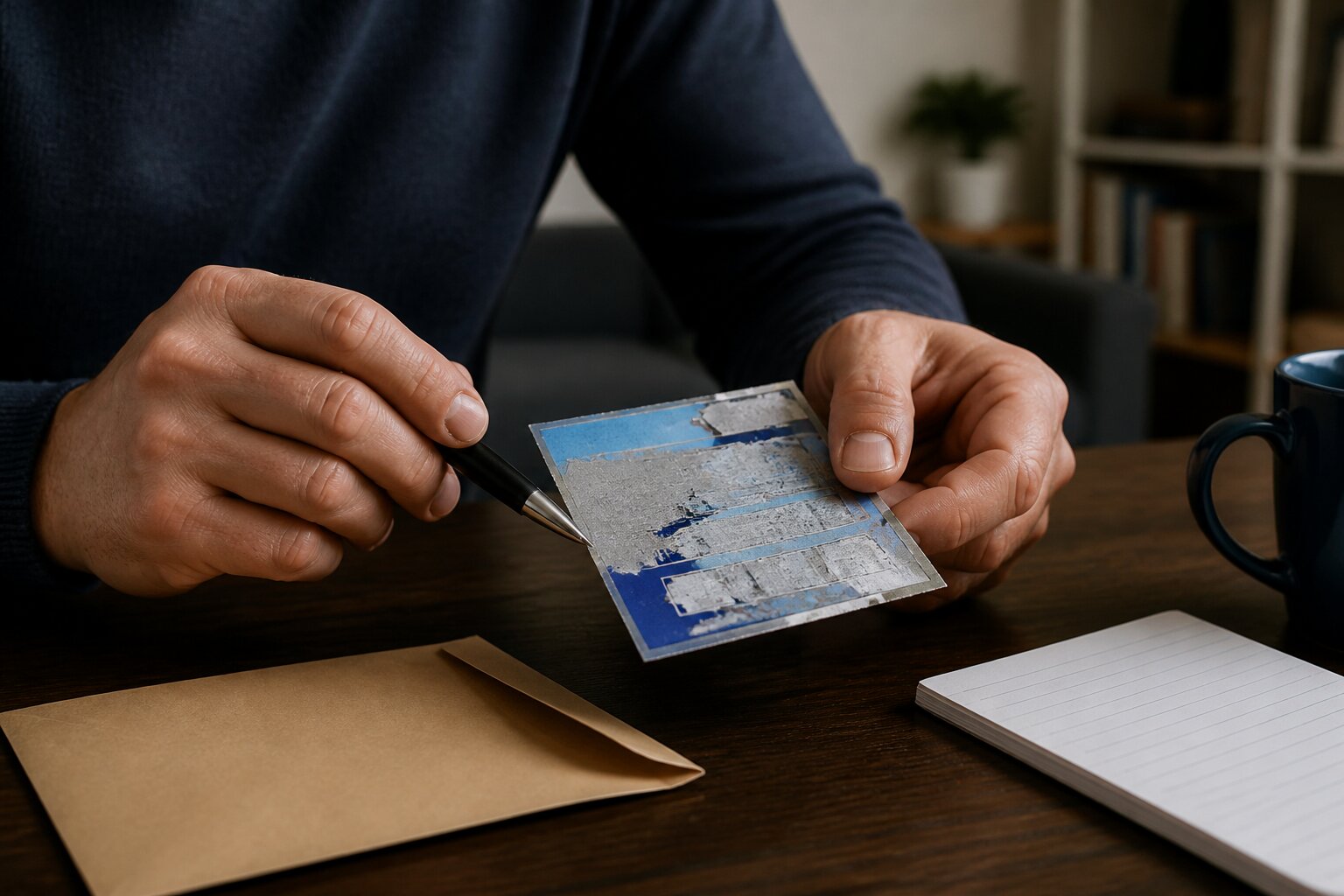
Imagine finally scratching off your lottery card to reveal a win, only to find the panel accidentally torn or the code washed out by a spilt brew. It’s upsetting, but damaged scratch cards are fairly common, whether from pocket mishaps, slips into a bag, or an overenthusiastic scratch. Knowing the right steps can make the difference between a smooth payment and a frustrating rejection.
Many UK operators have set procedures for dealing with cards that are faded, torn, or partly destroyed, provided you can supply the right details and evidence. This article explains what counts as damage, how to start a claim, the proofs you will be asked for, what happens when a ticket has already been scratched, how payouts are handled, and the most common reasons claims are refused.
If you follow the guidance here, you will be better placed to present a complete claim and understand the likely outcomes. Read on to see what to do first when you discover your card is damaged.
What Counts as a Damaged Scratch Card?
A scratch card is considered damaged when physical harm prevents the operator or a retailer from easily checking whether it is a winner. Typical problems include torn edges, water or liquid stains, overly scraped panels, smudged numbers, defaced barcodes, or missing parts of the secure code. The issue is not simply that a card looks tatty; it is whether the key areas can be read and validated.
The most important sections are the play panel, the validation barcode, and the serial number. If any of those are ripped, faded, or obscured by ink or adhesive, the card may not be directly verifiable. Operators normally require the serial number and barcode to be legible so they can match the ticket to their records and confirm whether a prize has been won and not already claimed.
Minor creases or a few smudges will not necessarily disqualify a ticket, provided the critical information is intact. Conversely, cards with altered or removed details, or with heavy abrasion across the coded areas, often cannot be paid out because there is no reliable way to prove authenticity.
Understanding what constitutes damage prepares you for the next step, which is how to make a claim and who to contact.
How to Start the Claims Process
Begin by contacting the operator for the card you bought, using the official claims form on their website, a customer service phone line, or the email address provided for damaged-ticket enquiries. Some operators ask that you post the damaged card to a verification centre, while others let you start with photographs and an online submission.
When you make contact, give clear details: the card’s serial number, where and when it was bought, and a plain description of the damage. If the barcode or serial number is readable, attach clear photos of both sides of the card; good images speed up the initial assessment. Keep your original card until the process is complete, and retain any receipt you have as further evidence.
Only adults aged 18 or over may claim prizes, so the operator may request proof of age or identity at a later stage. The claims team will use the information you supply to decide whether further examination or posting of the card is required.
If posting is requested, take care to pack the card so it cannot sustain more damage in transit; this reduces the chance of delays or rejection and helps with later verification.
Proofs You’ll Need to Provide
You will normally be asked to supply the damaged scratch card itself, plus supporting evidence to help confirm purchase and authenticity. The card is frequently required by post so that specialists can inspect it; before sending it, photograph both sides and keep copies for your records.
Clear images should show the serial number, the barcode if present, and the damaged area. A purchase receipt is useful because it provides the date, time and retailer location; if you have one, include a scan or photograph with your claim. Where a receipt is not available, a short written statement explaining when and how the damage happened can still help, for example a brief note stating the date of purchase and the circumstances in which the card was damaged.
Operators treat personal data in line with regulatory requirements, so expect your information to be handled securely. Hold on to any originals, including the card and receipts, until the operator confirms the claim is resolved.
Providing as much clear evidence as possible reduces delays and makes it easier for the verification team to reach a decision, which leads into the particular issues that arise when a card has already been scratched.
Claiming If You’ve Already Scratched the Card
If the play panel has already been scratched, the key question becomes what information remains legible. Operators must be able to verify the serial number and barcode, and confirm that the ticket matches their records and has not been paid previously. When those elements are intact, a scratched ticket can still be validated and paid.
When the important details are partly obscured, operators may carry out manual checks that take longer, and the outcome is not guaranteed. If the play symbols are worn away but the serial number is visible, the operator can sometimes use that serial number to trace the card and determine the prize. Where both the serial number and barcode are unreadable, it becomes very difficult to verify the ticket’s authenticity.
Can You Claim If the Details Are Unreadable?
If critical areas like the serial number, secure code, or prize boxes are unreadable, a claim becomes very hard to process. Without readable identifiers, there is no reliable method to prove the ticket is genuine or to match it against purchase or issuance records. That means the operator may be unable to approve a payout.
When only some information is unclear but enough remains, the verification team will evaluate the evidence you provide, such as photos, receipts, and a written account of what happened. This can sometimes lead to a successful outcome, though the effort required increases as more details are missing.
What If the Barcode Is Missing or Damaged?
The barcode is used to scan and validate tickets at retailers and in processing centres. A smudged or torn barcode slows down validation because it prevents automated checks and may need manual handling. If the serial number is present, staff can sometimes follow alternative verification routes, but there is no certainty.
A damaged barcode with a clear serial number may still be examined and paid after additional checks, whereas a missing barcode and unreadable serial number will usually result in a declined claim. The more readable detail you can supply, the better the prospect of a successful verification.
Having explored how existing scratches affect a claim, the next section explains what happens once the operator accepts a damaged-card claim and how payments are arranged.
How Payouts Are Handled for Damaged Cards
When a claim for a damaged card is accepted, the ticket passes through a verification process where specialists inspect the card and all the supporting material you supplied. They check identifying numbers, barcodes, and any receipts against internal records and eligibility rules set by regulators and the operator.
The method of payout depends on the prize amount and how you submitted the claim. Smaller prizes are often paid directly into a nominated bank account or credited to an online account, while larger amounts may be paid by cheque or collected in person after further checks. For higher-value claims, additional identity verification is commonly required before payment is authorised.
There is no single guaranteed timeframe because the extent of the damage and the complexity of the verification determine how long the process takes. Most approved claims are settled within a few weeks, but more severe cases can take longer while the operator completes manual checks and documentation.
Payments are issued only after approval; where a ticket cannot be validated, the operator must decline the claim.
Common Reasons Claims Are Rejected
Claims are refused for a small number of recurring reasons, often because the operator cannot satisfactorily confirm the ticket or the circumstances around it. Typical causes include:
- Insufficient proof of ownership, for example when the serial number cannot be shown or a receipt is not provided if requested.
- Critical details missing or unreadable, such as a barcode or serial number that has been removed or obliterated.
- Evidence of tampering or fraud, for instance deliberate alteration of codes or reconstruction of symbols.
- Missed claim deadlines, where the ticket is submitted after the operator’s stated expiry period for claims.
- The card being reported lost, stolen, or already paid, which stops processing if the ticket is flagged in the operator’s systems.
Avoiding these issues is mainly a matter of careful handling and speedy action: keep tickets safe, photograph them as soon as damage is discovered, keep receipts, and send any required materials promptly.
Responsible play underpins a fair system for everyone, so operators expect claims to be made openly and with full information.
This guidance should leave you better prepared to identify damage, gather the right evidence, and present a clear claim. Follow the operator’s instructions closely, provide the requested proof, and keep copies of everything until the matter is resolved to give your claim the best chance of success.
Play Online Casino Games at VIP Spins
At VIP Spins, we invite you to discover the wide selection of online casino games available for your enjoyment on our site. There is plenty to explore, with something to suit every taste.
Getting started could not be simpler: just create your account, make a deposit, and you are ready to play. We look forward to welcoming you as part of our community.
**The information provided in this blog is intended for educational purposes and should not be construed as betting advice or a guarantee of success. Always gamble responsibly.